
Decreased frequency and/or change to smaller/harder stools.
Almost all people will have issues with constipation at some point, but patients in hospice are especially prone to developing severe constipation
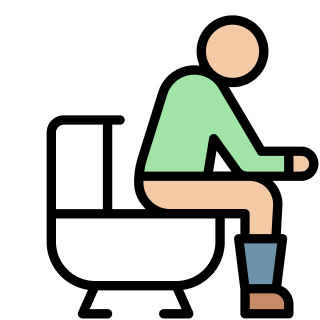
Decreased frequency and/or change to smaller/harder stools.
Almost all people will have issues with constipation at some point, but patients in hospice are especially prone to developing severe constipation

Decreased activity
Changes in diet with less fiber, less fluid
Medications - Very common cause
Decreased frequency of stool, harder to pass
Abdominal discomfort/pain
Fullness sensation in rectum
In patients with Dementia, can present as increased agitation
Sometimes constipation can present as small liquid stools due to 'overflow' from a fecal impaction
Increase fluids (if safe) and increase activity if able
Laxatives have been provided by Hospice
It is not necessary to have a bowel movement every day, but should not strain or be passing hard stools
No bowel movement for more than 2 days
Increasing pain or discomfort
Passage of blood in stool
Increasing agitation
LAXATIVES SHOULD ALWAYS BE TAKEN IF USING OPIOID PAIN MEDICATIONS
(unless told otherwise by the Hospice Team)
Partner for Care is your trusted companion, offering a comprehensive repository of resources and guidance to support you every step of the way in your caregiving journey. With our user-friendly platform, you can access vital information and assistance whenever you need it.
409 Tennant Station, #1033
Morgan Hill, CA 95037
408 317-7030